How to Send Meaningful Eid Mubarak Cards
·5 min read
When to send Eid Mubarak cards, what to write inside, and why a posted card still matters next to a group text.
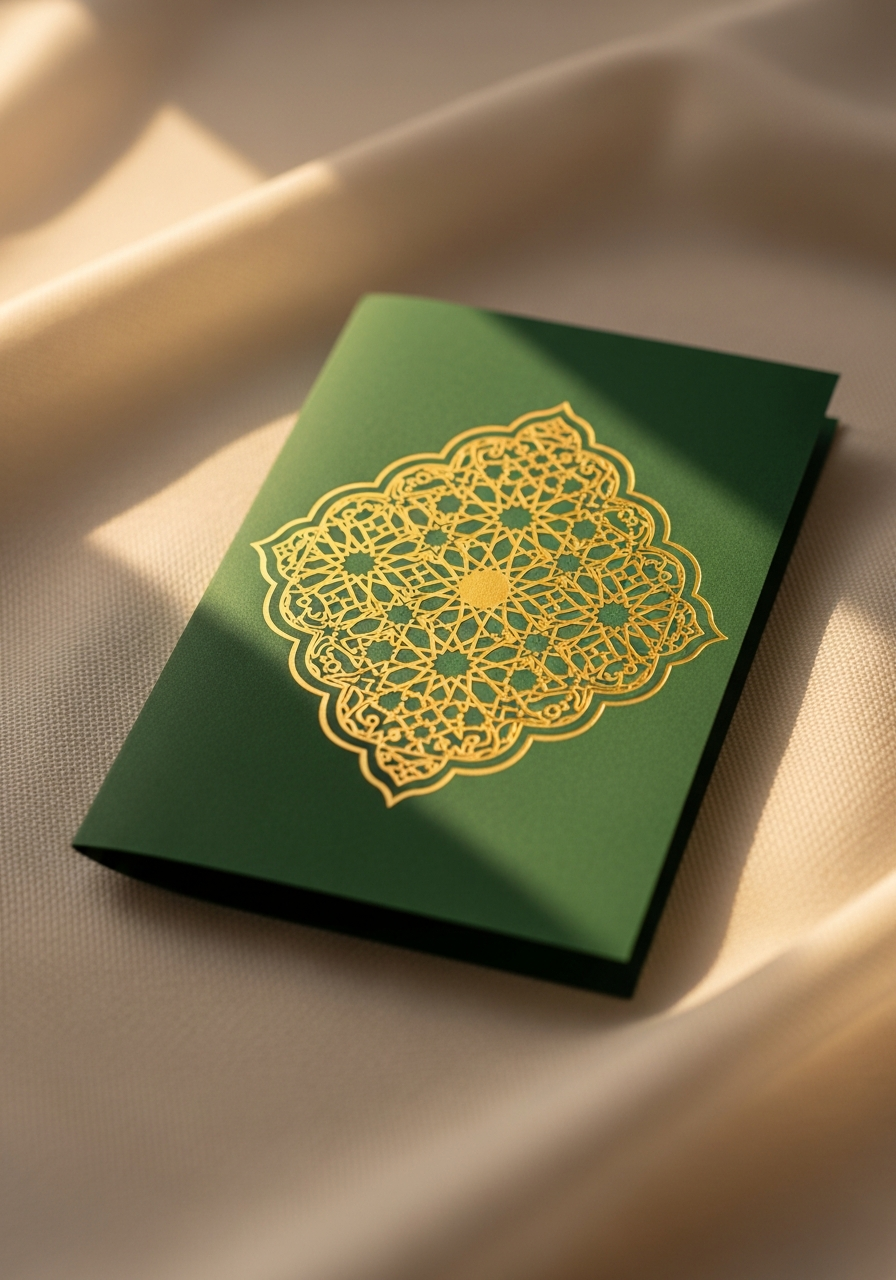
Eid morning moves fast. New clothes, family WhatsApp threads, the smell of something frying in the kitchen, kids already asking about gifts. In all of that noise, a physical Eid Mubarak card can feel almost old fashioned. That is why people notice it.
A card asks someone to pause. It says you thought of them before the day got busy. You do not need a big speech for that. You need good timing, a few true words, and a card they will keep.
Why an Eid card still matters
Group texts are kind. They are also everywhere. By midday on Eid, most people have scrolled past dozens of the same sticker. A card arrives differently. It has weight. It has handwriting. It sits on a mantel or gets tucked into a Qur'an shelf and found again next year.
I care about that because I grew up in a house where cards were normal. After I became Muslim, I wanted Eid to have that same small habit: pick something beautiful, write in it, give it. Not instead of a hug or Eidi. Alongside them.
When to send an Eid Mubarak card
If you are posting it, aim to send it several days before Eid so it arrives on time. Local mail can be forgiving. International post needs more time than people expect, especially near the end of Ramadan when shops and sorting offices get busy.
If you are handing it over in person, you can wait until Eid day. Slip it in with a box of sweets. Leave it at a relative's place when you visit. Give it to a neighbour who always hosts. The point is not perfection. The point is that it shows up with the day, not two weeks after everyone has gone back to work.
Who to send cards to
Start with the people whose names you would miss if they were not at your table. Parents. Siblings. The friend who checked on you through Ramadan. A teacher. A neighbour. Someone spending their first Eid away from family.
You do not need a stack of twenty. Three cards you mean beat a pile of empty ones. If money or time is tight, choose the person who would feel it most.
What to write inside
Keep it human. “Eid Mubarak” on its own is fine if the card design already carries beauty. A little more is often better:
“Eid Mubarak. May Allah accept your Ramadan and fill your home with ease and joy.”
“Thinking of you this Eid. Grateful for you in every season, not only the festive ones.”
“Eid Mubarak to you and the family. May the days ahead be gentle and full of barakah.”
If someone had a hard Ramadan, say that carefully. You do not need to retell their struggle. “Holding you in my duas this Eid” is often enough.
Eid al-Fitr and Eid al-Adha are not the same card moment
The greeting can be similar, but the feeling shifts. Eid al-Fitr often carries relief and sweetness after fasting. Eid al-Adha carries sacrifice, gathering, and remembrance. If your card collection has designs for both, match the day. If you only have one Eid card, your handwritten line can name which Eid you mean.
Make the whole gesture feel finished
Pair the card with something small if you want: dates, chocolate, a handwritten recipe, a note for the kids. Or send the card alone. A good card does not need extra things piled on top.
Write while you still have energy. The night before Eid is chaos in many homes. A quieter evening earlier in the week makes for better handwriting and better words.
Pick a card they will keep
Thin card disappears into recycling. A proper Eid card feels solid before you write a word. Look for a design that feels Islamic without looking rushed, paper that holds ink, and a message inside you are happy to sign.
That is the standard I design to for Islamic Greeting Cards by UMRASTORE. Original Eid cards meant to be kept, not glanced at and forgotten. If you want Eid to feel a little more personal this year, start with one envelope and one honest line.
Explore the Eid card collection or read why these cards exist.